
Your Talent Stack Is Your Unfair Advantage
Why the most valuable skill in an AI world isn’t mastery... it’s skill development and a willingness to fail.

I’ve been thinking a lot about what makes creators and entrepreneurs successful. Not just the obvious skills, but the special combination of abilities that makes someone stand out.
This started because I felt discouraged because I wasn’t “the best” at any one thing. But then I read about this “talent stack” concept from the late Scott Adams.
In his book How to Fail at Everything and Still Win Big, Adams introduced an idea he calls the “talent stack.” He explains that he’s not the world’s best cartoonist, not the funniest person, and not the leading expert on corporate culture.
But when you combine those skills—being pretty funny, a good cartoonist, and understanding office politics—he becomes the best in the world at making funny cartoons that parody corporate culture.
This idea is exciting because it means you don’t need to be the absolute best at anything. You just need to find the right combination of skills that, when stacked together, create unique value.
And I think this idea has never been more important than it is right now.
My Talent Stack
Here’s how this plays out in my own work. I’m not the best YouTuber. I’m not the top email marketer. I’m not the leading course creator. I’m not the most well-known productivity teacher.
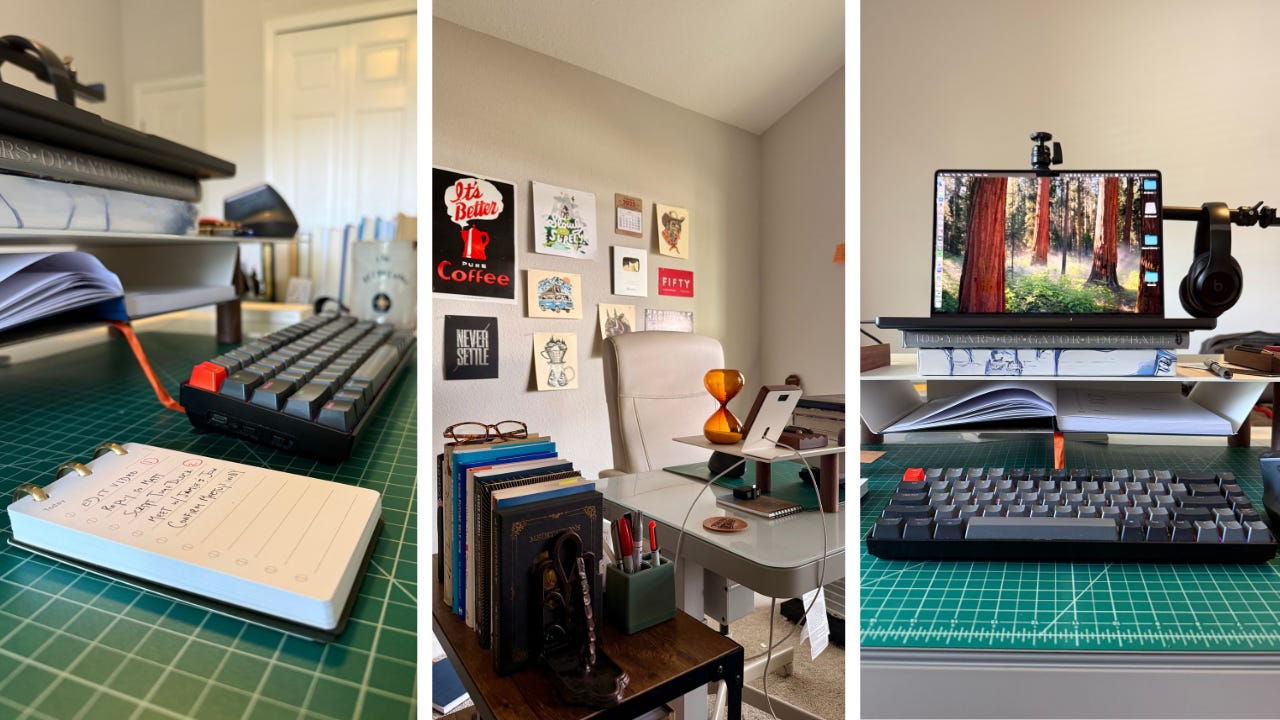
But combine these skills, and I’m among the best at understanding how YouTube drives newsletter growth and using email marketing to consistently sell digital courses.
That combination didn’t come from a grand plan. It came from years of doing the work, learning one skill at a time, and then waking up one morning realizing that all these things I’d picked up along the way had quietly stacked into something nobody else could replicate.
The same principle applies to life outside business. I may not be the world’s best dad, the most fit person, or the most successful entrepreneur. But I am in the top 5–10% of guys who balance fatherhood, fitness, marriage, and a profitable business… while having multiple kids.
This unique combination lets me speak with real confidence and experience about what it takes to stay healthy, keep a strong marriage, and build a business without burning out, getting divorced, or letting yourself go.
None of those things alone would be remarkable. Stacked together, they create a perspective that’s hard to find anywhere else.
The AI Plot Twist
Here’s where this gets interesting. And honestly, where my thinking on talent stacking has evolved the most in the past year.
We are living through one of the biggest skill-accessibility shifts in history. Tools like AI coding assistants, ChatGPT, and dozens of other AI-powered platforms have dramatically lowered the barrier to learning new skills. And this changes the talent stack game in a profound way.
Six weeks ago, I didn’t think I could build a working web application. I’m not a coder. I’ve never taken a computer science class. The idea of creating software felt like it belonged to someone else’s talent stack, not mine.
Then I discovered AI-assisted coding tools and spent an afternoon building a Pomodoro timer. A working app. On the internet. In about an hour. My mind was blown.
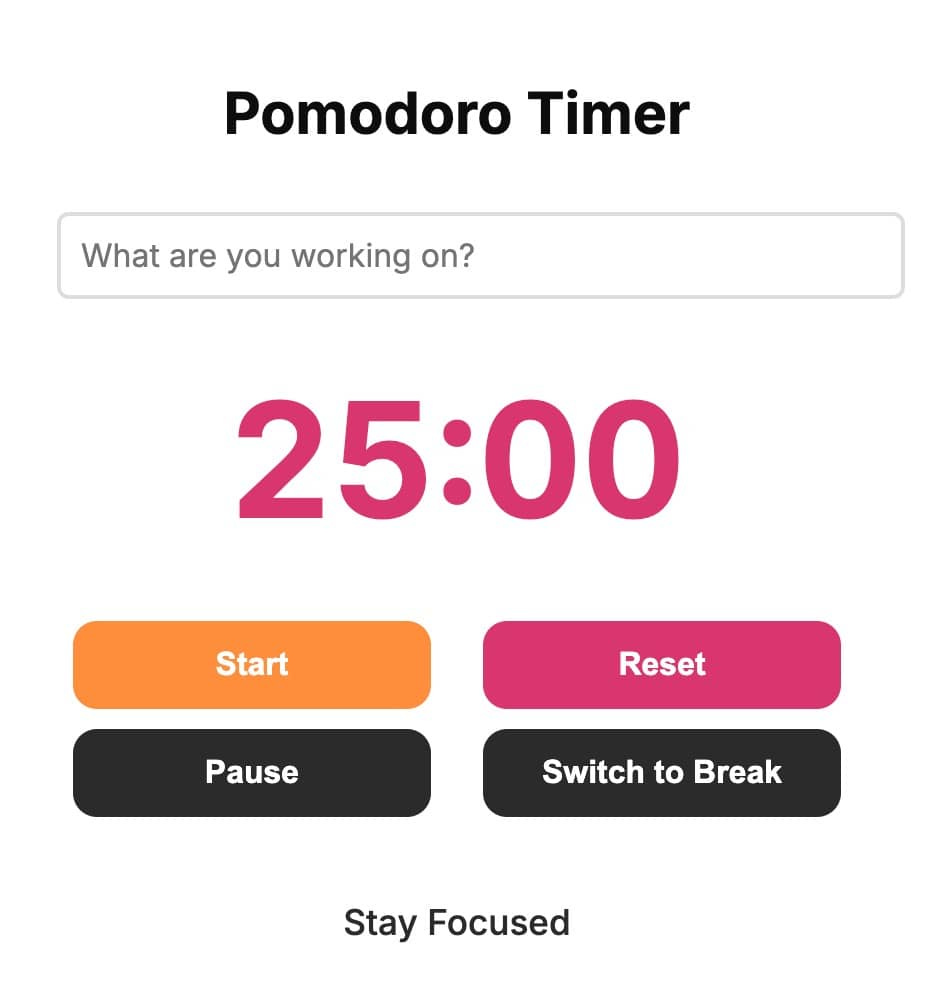
Being able to do that didn’t make me a software engineer. It didn’t need to. What it did was add another layer to my talent stack, a layer that when combined with everything else I already know about productivity systems and content creation, opens up possibilities that didn’t exist before.
Here’s what I mean: I’ve spent years teaching people my GAP planning method. Define your weekly goal, identify action items, protect time to work on them. I do this in a bullet journal every week and I believe pen and paper is still the best way to plan. But not everyone feels that way.
Now I can build a simple web tool that lets someone try the GAP method in seconds, without downloading anything, without signing up for Notion, without buying a notebook. I can take my ideas and make them more accessible to more people — because I was willing to look stupid for an afternoon and learn something new.
That’s the talent stack in action.
Learn Just Enough to Be Dangerous
There’s a phrase I keep coming back to: learn just enough to be dangerous.
Not enough to be an expert. Not enough to go pro. Just enough to experiment, to tinker, to see what’s possible when you combine a new skill with everything you already know.
I think this is one of the most important mindsets you can develop right now, especially in a world where AI is making so many skills more accessible than ever before. You don’t need to become a world-class programmer. You need to know enough to prompt an AI coding tool effectively. You don’t need a design degree. You need to understand basic visual principles well enough to communicate what you want. You don’t need an MBA. You need to understand your numbers well enough to make good decisions.
The temptation (and I feel this constantly) is to dismiss new skills because you’re not going to master them. “Why would I learn to code when there are real developers out there?” Because you’re not trying to become a developer. You’re trying to add another block to your stack. And that block, combined with everything else you’ve been building for years, might be the exact piece that creates something nobody else can.
Robin Sloan wrote something years ago that I think about all the time. He compared learning to code to learning to cook. Just because you want to improve your knife skills or understand how salt and fat and acid work together doesn’t mean you’re going to open a restaurant. You just want to cook better food. You want to put your own spin on things. You want the ability to make something personal and custom for yourself and the people close to you.
That’s what acquiring new skills feels like to me right now. I’m not building the next big productivity app. I’m making a simple, helpful, personal tool that matches how I think and how I work. And for now—maybe forever—that’s good enough.
The Real Risk Isn’t Wasting Time—It’s Standing Still
I’ll be honest: not every new skill I’ve experimented with has paid off immediately. I’ve spent afternoons tinkering with tools that I’ll probably never use again. I’ve gone down rabbit holes that led nowhere obvious. I’ve looked foolish asking basic questions about things that most people in a room already understood.
And every single one of those experiences added something to the stack.
Here’s the thing about talent stacking that most people miss: you don’t always know how the pieces will fit together when you’re acquiring them. The value often shows up later, in unexpected ways.
The email marketing skills I learned at ConvertKit didn’t seem directly connected to making YouTube videos—until they became the backbone of how I monetize my channel. The journaling practice I started years ago didn’t seem like a business asset—until it became the foundation of my most successful course.
You can’t always connect the dots going forward. But you can put yourself in position to have more dots to connect.
The real risk isn’t spending an afternoon learning something that doesn’t immediately make you money. The real risk is refusing to learn anything new because you can’t see the ROI yet. In a world that’s changing this fast, the people who stay curious and keep stacking will be the ones who adapt and thrive. The ones who lock in on a single skill and refuse to explore will be the most vulnerable to disruption.
Be Willing to Look Stupid
I want to say something about this that doesn’t get talked about enough: building your talent stack requires a willingness to be a beginner.
And being a beginner sucks.
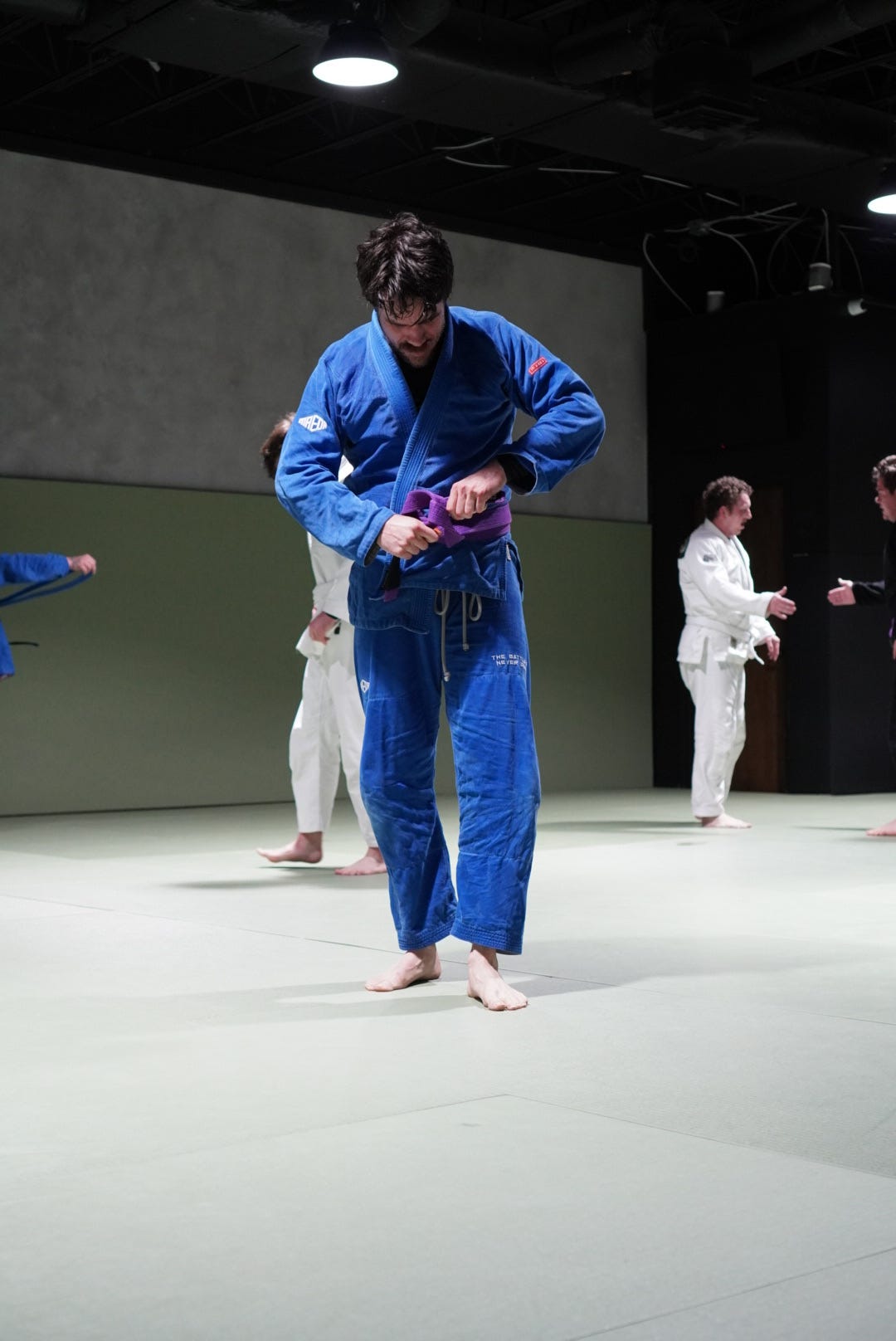
I think about this in jiu-jitsu. I’m a purple belt now, and when I roll with other purple and brown belts, I get humbled constantly. But then I go to a basics class and feel like I’m moving at a different speed than everyone else. That’s what happens when you put yourself in the bottom 10% of the top 10%—you’re actually in the top 90% overall. The discomfort of being the worst person in a room of excellent people is the fastest way to improve.
The same thing applies to learning anything new. When I started experimenting with AI coding tools, I was asking questions that an actual developer would laugh at. My first few attempts were messy. I broke things. I had to start over. I had security vulnerabilities. But each attempt taught me something, and each something added to the stack.
Most people won’t do this. Most people won’t sit with the discomfort of being bad at something when they’re already good at other things. It feels like a step backward. It feels like wasting time. It feels like you should be doubling down on what you already know.
But the magic of the talent stack is that it rewards breadth combined with depth. You don’t need to be great at the new thing. You just need to know enough to combine it with the things you’re already great at.
Teach This to Your Kids
This is something I think about as a dad, too. I want my kids to grow up understanding that their value doesn’t come from being the single best at one thing. It comes from the unique combination of who they are and what they know and what they’re willing to learn.
My son Canaan is ten, and he’s already building his own stack — he just doesn’t know it yet. He plays football, he trains jiu-jitsu, he’s learning to be a good teammate, and he’s figuring out how to stand up for himself. He’s not great at math, but he’s learning to be resilient and see the patterns. None of those things alone will define him. But together, they’re shaping someone who’s athletic, disciplined, confident, resilient, and kind. That’s a talent stack.
What I don’t want my kids to internalize is the idea that if they’re not the best at something, it’s not worth pursuing. That lie will rob them of so many skills, so many experiences, so many dots that could connect later in ways they can’t see yet.
I want them to stay curious. I want them to be willing to try things and look foolish. I want them to understand that the person who knows a little about a lot of things and a lot about a few things will always be more adaptable, more creative, and more valuable than the person who knows one thing and nothing else.
The Simple Exercise
The beauty of talent stacking is that you probably already have the pieces… they just need to be recognized and combined.
Take 15 minutes today and write down your skills, the topics you understand well, the markets you’re already part of, and the connections and relationships you already have. Don’t worry about what you could learn or need to develop. Focus on what you already have. I’m willing to bet there’s a profitable combination hiding in plain sight.
And then ask yourself one more question: What’s one new skill—even a small one—that I could start learning this week?
You don’t need to master it. You don’t even need to be good at it. You just need to start stacking.
Because the person with the deepest stack of skills, experiences, and perspectives isn’t just harder to compete with… they’re impossible to replicate.
And in a world where AI can do almost anything, being impossible to replicate is the ultimate advantage.
Talk again soon,
Matt “still stacking” Ragland